
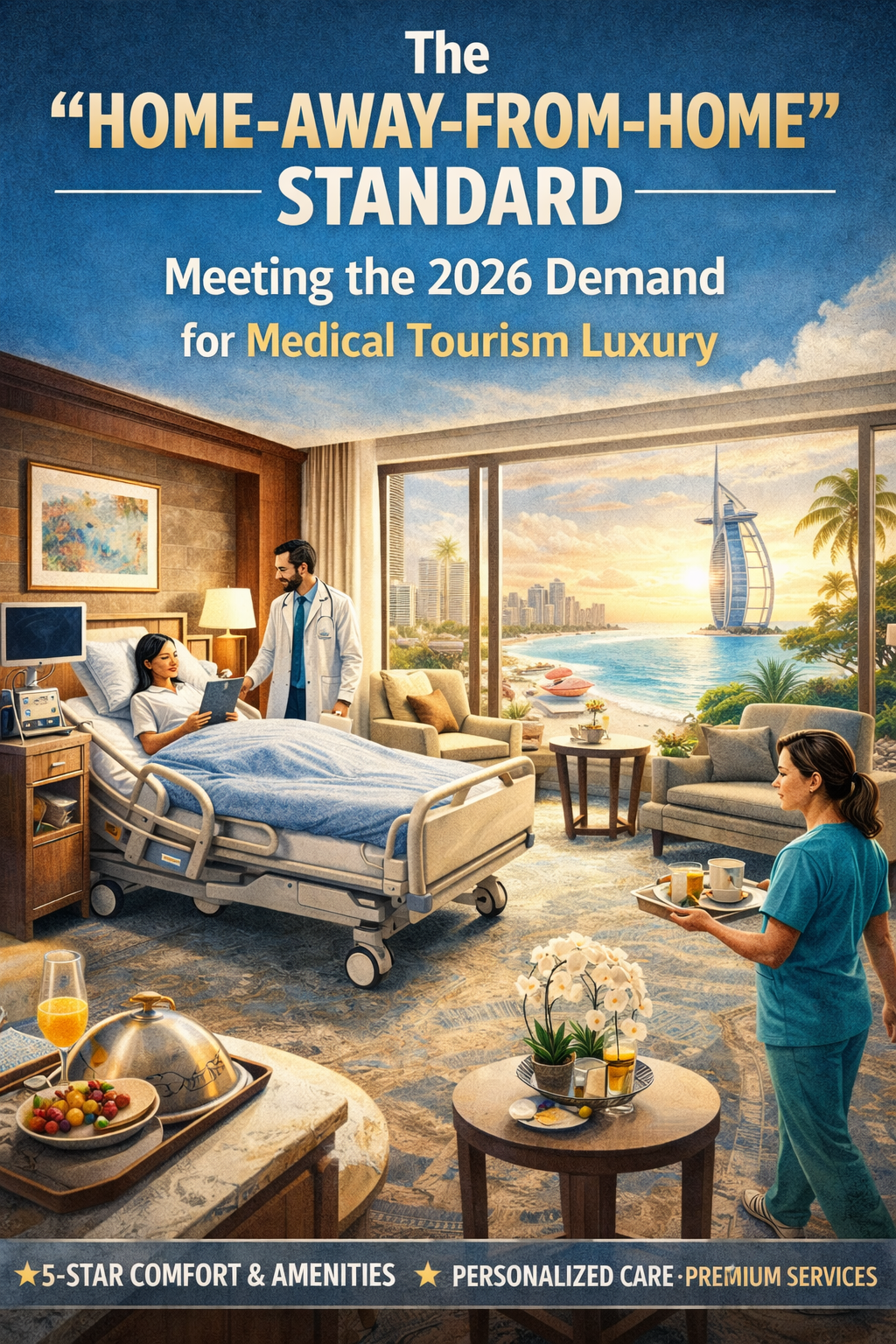
The parameters that define a “successful surgery” have changed radically. In the early 2020s, patients travelled between continents mainly to cut costs, but now they seek not only affordability but also a supportive and comfortable recovery environment that enhances their overall surgical experience. In 2026, the recovery experience no longer serves as the sole motivator for global medical travellers. Now, we are in the era of the home-away-from-home standard. This new gold standard not only dictates that a medical facility must deliver world-class clinical outcomes but also that its recovery environment should and can reflect the comforts, privacy, and aesthetics of a luxury home. Ward quality became crucial as medical tourism hot spots competed for the elite traveller.
The Transforming Face of the “Luxury Ward”
In 2026, a sterile, white-walled hospital room is an outdated relic. Five-star hotels across Asia, the Middle East and North America are overhauling their recovery areas to minimize “institutional stress.”
Why is the 2026 Recovery Suite the thing we need?
- Invisible Technology: Medical monitors and oxygen ports are built behind decorative headboards, popping out into view only when medically necessary to preserve a nonclinical feel.
- Circadian Lighting Systems: Wards now use smart lighting that mimics the natural path of the sun, aiding international patients in getting with new time zones and promoting faster cellular repair.
- Family-Centric Design: And suites now have “companion wings” so that family can stay comfortably and a patient doesn’t have to feel isolated during the crucial first 72 hours of healing.
The Infrastructure Arms Race
Meeting these demands is driving billions of dollars in modular infrastructure investment across hospitals. This enables a standard room to become a high-dependency unit (HDU) within minutes. But sustaining this level of advanced hardware means having a sophisticated local supply chain.
In major medical hubs, high-end equipment poses a logistical headache that can account for a large portion of operating costs. For example, when computing overhead for a premier recovery centre in the Greater Toronto Area, administrators must factor in hospital bed rental in Vaughan facilities because high-spec, fully electric beds are imperative to both patient safety and comfort. These localized economic phenomena clarify which cities can afford to sustain their “luxury” brand.
Global Leaders: Who Is Ahead in the Race?
Southeast Asia’s “Wellness Hubs”
Thailand and Malaysia have outgrown basic dental and cosmetic procedures. Today they are pioneers in the field of “Medical Wellness Integration,” which refers to the combination of traditional medical practices with wellness services to enhance patient care and recovery. Their wards often have private balconies that overlook Zen gardens, merging traditional medicine and ultra-modern recovery tech.
The Middle Eastern “Medical Cities”
Cities like Dubai or Riyadh, on the other hand, have built entire “medical cities” from their inception. They are, in effect, five-star resorts with surgical theatres. Here, the infrastructure prioritizes extreme privacy, catering to high-net-worth clientele who seek VIP security alongside post-operative care.
The North American Boutique Clinic
And while large hospitals remain deeply entrenched, the year 2026 has seen a proliferation of “boutique recovery centres” both in Canada and the U.S. These centres are where they address the “last mile” of care. For patients requiring lengthy recovery away from a hospital, finding a good hospital bed at home in Richmond Hill or another wealthy suburb had become the norm of the medical tourism concierge package.
Why Patients Are Choosing Price Over Infrastructure
However, looking at the 2025 and early 2026 data, a clear trend emerges: patients are willing to pay an average of 20-30% more for hospitals that market themselves as “environmental “healing”-focused facilities.
- Patient Priority (2020)
- Patient Priority (2026)
- Low Surgical Cost
- High Post-Op Comfort
- Surgeon Reputation Only
- Surgeon + Facility Wellness Rating
- Basic Recovery Room
- Integrated “Smart” Recovery Suite
- Quick Discharge
- Seamless Home-to-Hospital Transition
Artificial Intelligence and Robotics in Recovery
Frictionlessness and its inverse also define luxury in 2026. Robots now do the “heavy lifting” in terms of ward maintenance—delivering meals, carting linens, and even moving patients who have limited mobility—which allows human nurses to keep their focus on emotional comfort and clinical monitoring.
- AI Nutritionists: Meals are chef-prepared, nutritionally dense menus tailored by AI to suit the specific metabolic needs of each patient after surgery—much better than what we think of as “hospital food.”
- Virtual Reality Concierge: Patients can don VR headsets to “visit” their house or watch relaxing things to see, greatly decreasing cortisol levels and pain perception.
Conclusion: A New Frontier for Global Health
The 2026 medical tourism market has shown that a patient’s surroundings are as crucial as the surgeon’s scalpel. The new expected norm for the modern traveller is “home away from home,” not a luxury.
As destinations jockey for position, the question will be, will high-tech medical infrastructure and high-touch human hospitality prove to coexist? For the patient, this translates into a recovery no longer contingent on brute clinical necessity but rather one that resembles a transformative journey toward health.