
- by Mike
- 0 Comments
The move from hospital to home is a key stage in any recovery. For many patients, though, seeing medical equipment in their personal sanctuary can be overwhelming or “clinical.” Studies find that our surroundings have a direct effect on how much stress we experience, while more recent research shows that anxiety impedes natural healing processes in the body.
Styling a home recovery room requires striking an ideal balance between ensuring clinical efficiency and fostering personal comfort. So, by deliberately creating a space that feels like “home,” rather than a “ward,” you can help reduce cortisol levels, enhance sleep quality, and cultivate the positive mindset required for fast recovery.
Begin With Comfort’s Anchors
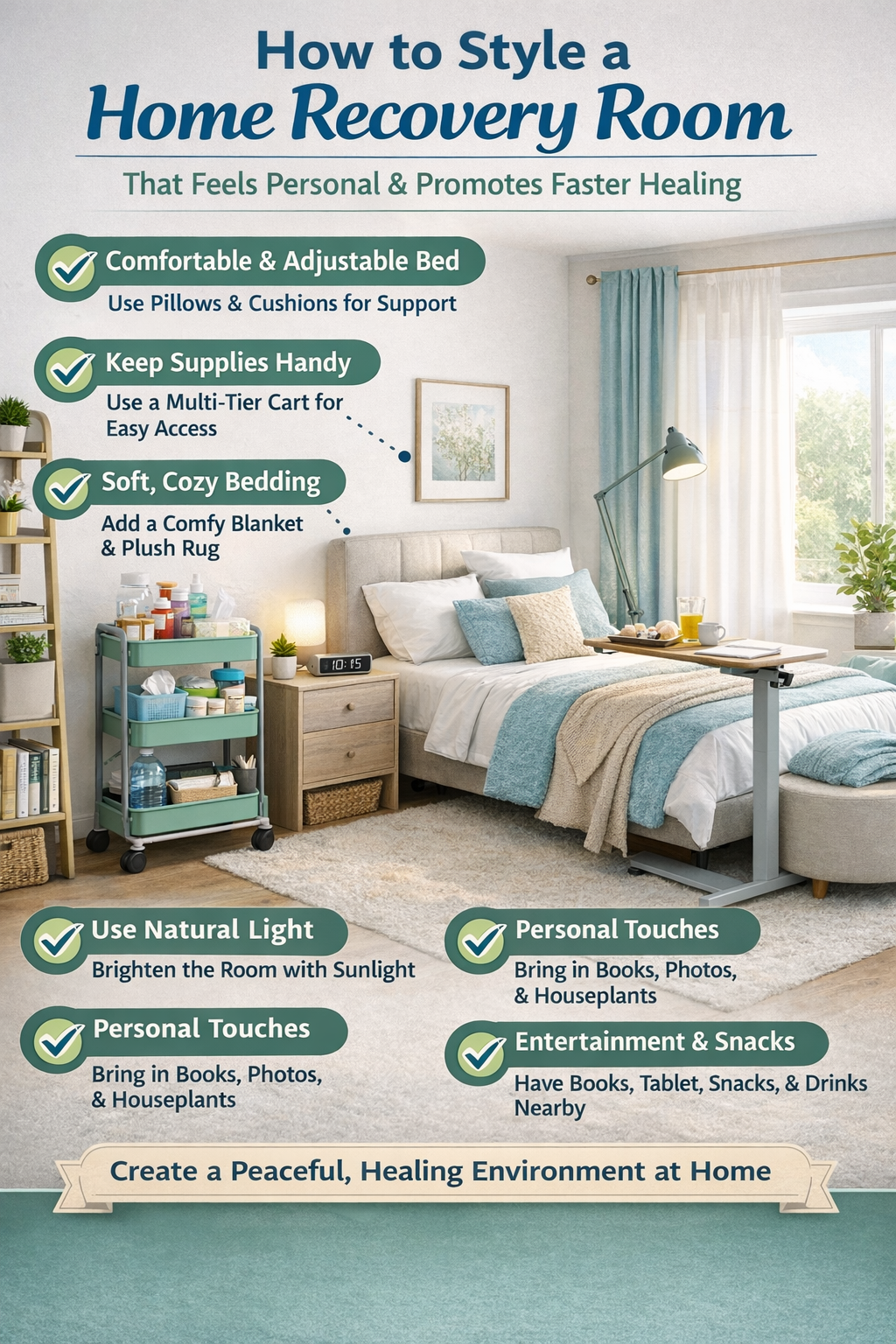
At the heart of any recovery room is the bed. And while a basic mattress might not provide the elevation or support needed for post-surgical care or chronic respiratory issues, a medical bed can still look decent.
The Foundation of Functional Style
And any modern medical furniture is far more aesthetic than the old steel frames. For those looking to rent a hospital bed Vaughan providers usually recommend, be aware that it will cost you approximately $150 to $350 monthly, your final price depending on semi-electric vs. fully electric models. Using a [luxury medical bed rental] enables you to enjoy high-end wooden insets and modules, whisper-quiet motors that harmonize with the rest of your home decor while giving you professional-quality service.
Layering Your Linens
- Hospital-issued sheets are made to be durable, not soft. To personalize the bed:
- Opt for high-thread-count cotton: Breathable, natural fabrics, which have a higher number of threads per square inch, aid in temperature regulation.
- If your doctor approves, using a weighted blanket can help reduce anxiety and promote deeper sleep.
- Throw on a decorative blanket: A vivid, casual quilt or well-worn knit blanket cuts through the hospital feel of the room.
Harmonize with “Biophilic” Design
Biophilic design—connecting human environments to nature—is a potent healer. Research has suggested even a glimpse of greenery can decrease the need for pain medications and lead to shorter recovery times.
- Maximize Natural Light: Place the bed so that the patient has a view of outside, if there is a window. Sunlight regulates circadian rhythms, which means we sleep better at night and feel more alert during the day.
- Foliage So Easy: Add plants such as snake plants or peace lilies. They clean the air and bring a feeling of presence into the room without all the heavy manual labour that goes into gardening.
- Nature-Inspired Art: If a window view isn’t feasible, hang artwork depicting landscapes, forests, or water. These “fractal” patterns are inherently pleasing to the human eye.
- Sensory Soothing: Beyond the Visuals
Healing is a multisensory experience. So in order to quiet an anxious mind and encourage relaxation, you’ve got to figure out sound, scent, and temperature.
Control the “soundscape.”
- Hospitals are notoriously noisy. However, at home, you have the opportunity to curate your soundscape:
- White noise machines: These can be helpful for drowning out household foot traffic or neighbourhood sounds.
- Curated Playlists: Soft acoustic music or nature sounds can help “anchor” a patient in difficult physical therapy sessions.
- Aromatherapy and Air Quality
Make sure the room is fresh-smelling, not “disinfected.”
- Essential oils: Lavender is known globally for relaxation, while peppermint might help with mild nausea. Opt for a diffuser instead of candles for safety.
- Air Purifiers: A HEPA filter keeps allergens and dust from circulating, which is critical for those with compromised immune systems.
The Power of Personalization
One guaranteed way to make a room feel clinical is by erasing the patient’s identity. A recovery room should be filled with items that reflect the patient’s identity.
- The gallery wall: Pin “get well” cards, children’s drawings, and family photos on a corkboard or dedicated section of a wall.
- Library Nook: Stock a basket with favourite books and magazines or preload a tablet with movies.
- Staples You Already Use: Having your go-to lotion, hairbrush, lip balm, or other small comforts here can be a game changer on the morning front.
Conclusion
A home recovery room is not a cell; it should be like a sanctuary. By emphasizing soft textures, natural light, and personal mementos, you make a place of “illness” one of “wellness.” Whether that comes from physical safety (the hospital bed rental cost Vaughan takes care of) or just moving things around to get the afternoon sun, every little touch is geared toward one thing: a quicker and more comfortable trip back to health.