
- by Mike
- 0 Comments
Just like that, leaving the hospital was a different phase. It signals progress and hope. But it comes with a whole new set of problems, too. Turning your home into a safe recovery environment requires careful consideration. It’s not just about comfort; it’s also a patient-safety and caregiver well-being issue.
Discharge instructions provide medical details. Discharge instructions frequently overlook the specific details of home adjustments. This guide offers professional insights. It assists you in creating a more functional home recovery model. That way, no transition has a harsh impact on everyone.
Understanding the Home Recovery Environment
Your home holds sentimental value. It is your personal sanctuary. But it was not designed for medical recovery. Transitions work best when they are made to be part of the known environment. That means looking at your home with a fresh perspective.
The idea is to try and take the little bit of risk out. And it’s to get the most possible independence. Think about daily routines. Think about every action the patient will take. An environment that is prepared correctly takes accidents away. It also supports faster healing.
Identifying Key Areas for Modification
Every home has unique features. So everyone’s recovery plan is individual. But there are some places that could use, you know, a little maintenance once and a while. These places are where a patient can walk and be nursed.
- Bedroom: This room is the main recovery space.
- Bathroom: Greatest risk of falls; special attention needed.
- Common Areas: Seating and entertainment options.
- Pathways: Unblocked passageways linking the various locations.
- Door: Safe entry and exit from the home.
Concentrating on these zones first helps in effectively prioritizing efforts. And it ensures that the most urgent needs are addressed quickly.
The Role of Specialized Beds
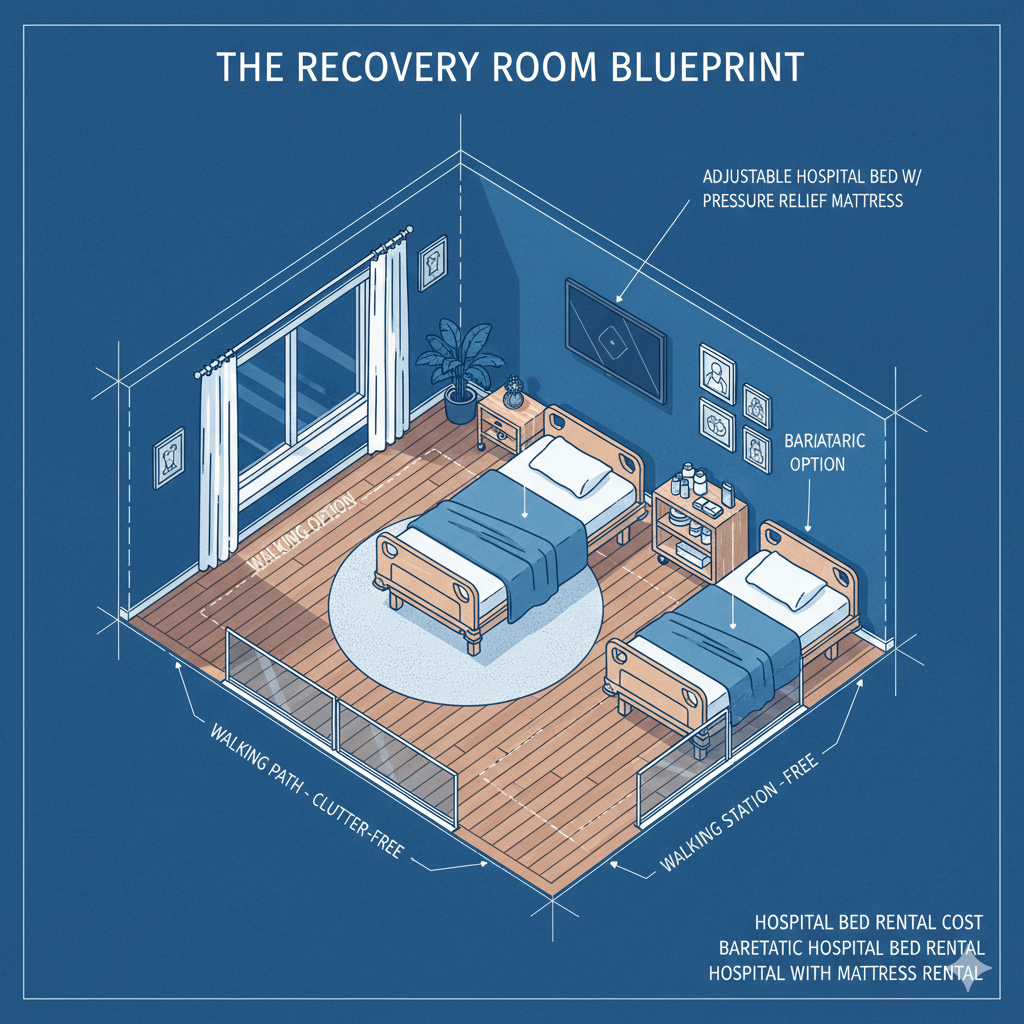
Most of the time, a normal bed isn’t good enough to help undertake this recovery. Patients may require assistance sitting up. Also, they might position the body in a specific way. So, it’s a special bed that you need. It offers adjustable features. These functions are conducive to diverse medical requirements.
Families will want to compare hospital bed rental vs buying options as a first step. Renting is an option if you have a short recovery time. It also reduces initial costs. By the way, purchasing might work better for chronic ills.
Strategic Equipment Selection and Setup
Picking the right gear is everything. It directly impacts patient safety. It also influences caregiver ease. Never underestimate the power of right tools. These items reduce strain. They also promote patient dignity.
There are numerous choices of home medical equipment. Not everything has to be newly purchased. The quality of the stuff you will have access to, if you rent. It avoids significant upfront investment.
Selecting the Best Bed for Comfort & Care
The bed is the focal point of a recovery space. It should have sufficient support. Moreover, it should be readily adjustable. And a regular bed just can’t do that. So it is common for a hospital-type bed to be advised.
The price for the rental of a hospital bed will depend on the model. Standard electric beds have head and foot elevation. Advanced models include hi-low functions. They can do the Trendelenburg and reverse Trendelenburg positions. Such features are important for certain medical applications. For instance, keeping up the legs can minimise swelling.
The Importance of the Mattress
Never overlook the mattress. A bed frame is only half the problem. The correct mattress keeps away pressure sores. It also enhances patient comfort. You must insist on a cot with a mattress at the hospital.
- Pressure redistribution mattresses are key.
- Low-air-loss systems aid in skin moisture control.
- Gel overlays provide extra comfort.
- Mattresses also need to work with adjustable frames.
- Waterproof covers protect against spills.
- The mattress should have firm edges to ensure safe transfer.
The right mattress can make all the difference. It lowers the risk of skin breakdown. This is particularly relevant in patients unable to mobilize.
Addressing Specialized Patient Needs
Not all patients need the same thing. Some individuals need enhanced support. Standard equipment might not suffice. It’s important to understand these special oobleck requirements for the safety. It ensures effective care.
Always consult medical professionals. They can also guide you through specific equipment needs. This is to avoid mistakes and take proper care.
Solutions for Larger Patients
Regular beds are weight limited. Exceeding these limits is dangerous. It could result in machine damage. Bariatric hospital bed rental is available for larger patients as well.
These beds are broader and more potent. They accommodate higher weight capacities. Moreover, they offer more space. This allows for easier repositioning. It also minimizes the potential of skin damage. Bariatric equipment protects and maintains dignity. It reduces the patient’s and attendant’s risk of injury.
Long-Term Financial Considerations
And cost is a big issue for many families. Medical costs are also a significant burden to bear. So, this is where a prudent financial analysis becomes important. You will want to carefully compare hospital bed rental vs buying.
Buying might be more cost-effective for long-term use. However, rentals include maintenance. They also have a variety of upgrade options available. If the recovery is short-lived, renting typically comes out ahead. You don’t have to deal with the hassle of selling or disposal. Delivery and setup are included in the hospital bed rental price. This is a major win for the busy family.
Rental agreements are often month-to-month.
- Buying comes with up-front expenses and ongoing maintenance.
- Rentals allow testing different models.
- No overcurrent devices to salvage after recovery.
- Delivery and installation are typically included.
- Insurance may differ for rental and purchase classes.
- Designing for Caregiving and Efficiency
Caregivers play a vital role. Their health is crucial in the provision of patient care. A well-designed recovery room can help them along. It minimizes physical strain. It also streamlines daily tasks.
Think about the caregiver’s movements. Can they reach everything easily? Is the patient working at an ergonomic height? Optimizing the space benefits everyone.
Ergonomics and Accessibility
Adjustable bed height is critical. It provides an easy way for caregivers to work without tripping. Bending and lifting can be averted. This prevents back injuries. Clear paths are critical for mobility devices as well.
- Make sure there is adequate room around the bed.
- Use overbed tables for convenience.
- Keep frequently used items close.
- Have grab bars installed in the bathroom.
- Make sure the caregiver has a comfortable chair.
- Utilize rolling carts for supplies.
Communication and Monitoring
Effective communication is vital. Caregivers must be able to listen fast. Consider intercoms or baby monitors. If I have nothing else, why do these tools provide such comfort? They also provide immediate alerts.
In the meantime, create a device-charging hub. Keep important phone numbers visible. A well-integrated communication centre enables the provision in continuity.
Finalizing Your Home Recovery Space
Before your patient arrives, go through a thorough walkthrough. Test all equipment. Simulate patient movements. Are there any hidden obstacles? Is everything functioning correctly?
This final check ensures preparedness. It’s bringing potential issues to the forefront of discussion before they become problems. Smooth Arrival Is Stress-Reducing for Everybody .
A Window of Opportunity
The first few days at home are challenging. There is a lot to learn. New patterns would need to be given time to become firmly established. Therefore, maintain a flexible schedule. Concentrate on caring and comfort.
Limit visitors initially. Allow the patient to adjust. Support the caregiver’s needs. A gentle opening is good for the psyche when recovery is positive.
Conclusion
Designing efficient recovery space for critical care is possible. It only happens with thoughtful planning and the right resources. The benefit of knowing however can empower both patient and/or caregiver. From dealing with hospital bed rental costs to choosing a bariatric hospital bed rental, every choice makes a difference.
One good thing to remember is that a home suitable for recovery is also suitable for healing. It helps ensure independence and gives a sense of security. Make informed choices. Start setting the blueprint for recovery success today.