- by Mike
- 0 Comments
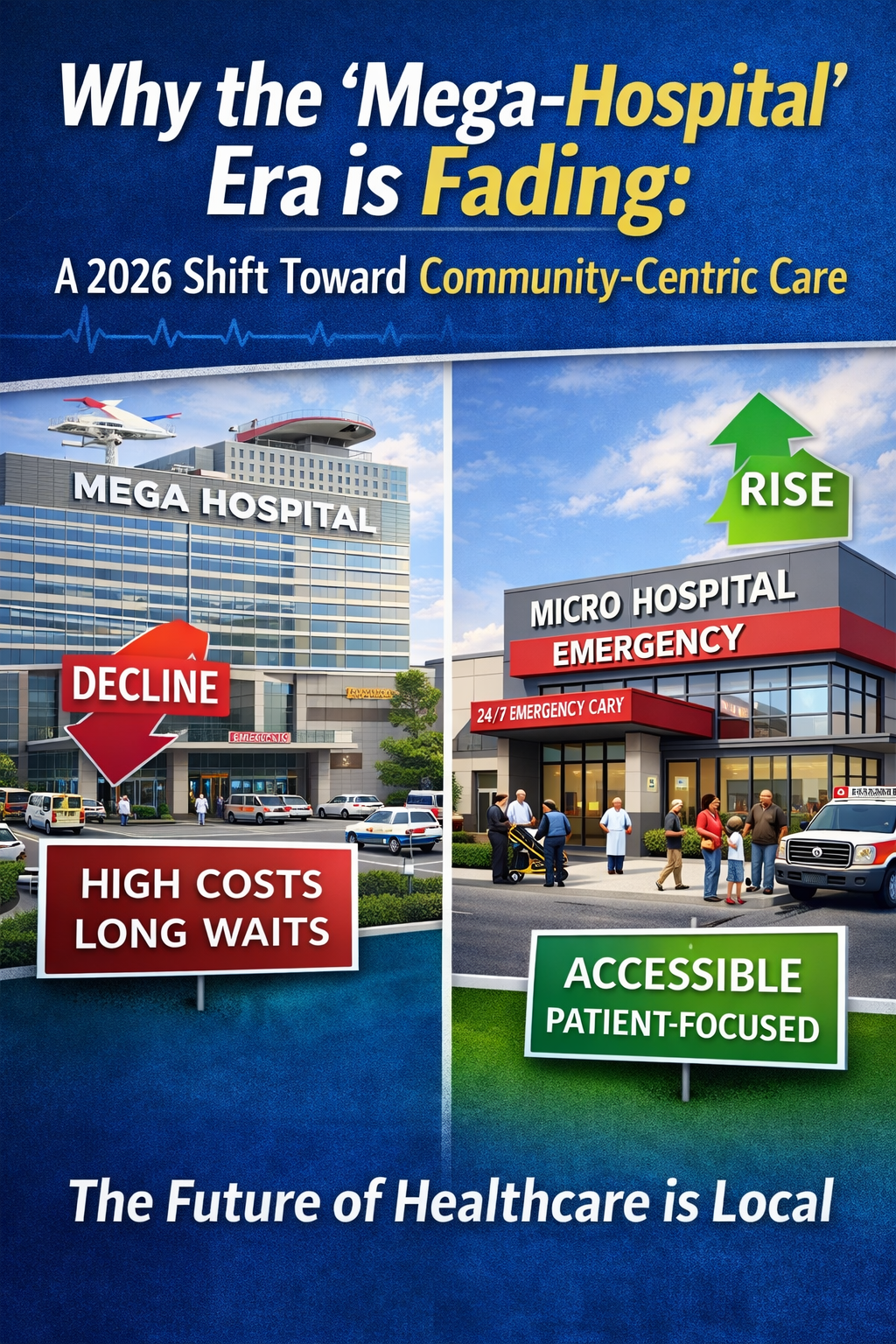
For over a century, the mega-hospital had been the pinnacle of medical excellence. These vast, centralized facilities aimed to tackle every known ailment within a single structure. But in 2026, the cracks in this centralized model are becoming increasingly difficult to ignore. Patients do not want to waste hours commuting and waiting, ultimately seeing a string of unrelated providers. In its place rises a new era of decentralized, community-centric care. By emphasizing access, personal comfort, and local networks of support over institutional breadth, this approach can improve patient satisfaction as well as secondary health outcomes in the community, such as reduced hospital readmission rates and increased engagement in preventive health measures.
The Centralized Medical Hub Is No More
Mega-hospitals are facing a combination of operational and financial challenges. By 2026, the financial burden of upkeep on enormous brick-and-mortar facilities had exploded. And staffing shortages have struck large institutions especially hard. Nurses and doctors are opting to work at nimble community clinics instead.
And the patient experience in big hospitals has been the worse for it. At centralized hubs, wait times for routine procedures can reach into months. Meanwhile, community-based models are providing results more quickly and at far lower overhead, leading to improved patient satisfaction and better health outcomes compared to traditional hospital settings. The mega-hospital’s “one-size-fits-all” model is just too inflexible for the era of personalized medicine, which requires tailored approaches to patient care that can adapt to individual needs and preferences.
The Decentralization Victory of 2026
The risk of infection is Lower: Smaller facilities lead to decreased concentration of sick patients in a particular space.
- Better Mental Health: Patients feel less stress when they heal in their own community.
- Cost-Efficiency: Community hubs do not have the massive administrative bloat of a regional centre, which allows for more resources to be allocated directly to patient care and services.
- Environmental Sustainability There is less carbon footprint when the care is local.
- Customized Services: Small clinics can cater to the unique needs of their community.
- Mobile health apps work better with local agile providers.
The home is becoming the central and regional hub for healthcare services. of Care
The biggest shift in 2026 is how the home has become a clinical space. We are no longer constrained by the “four walls” of a hospital facility. Instead, high-end remote monitoring and mobile diagnostics bring acute care to your bedroom.
To help make sure this transition goes well, families need trustworthy local allies. Step 1 is to find a hospital bed rental provider in Milton if you are recovering at home in the Halton region. These are local specialists who make your home environment as safe as a professional ward. For maximum comfort, a luxury medical bed rental option can offer premium features such as massage zones and advanced positioning. Such specificity of equipment is rarely achieved in the standard, utilitarian setting of a mega-hospital.
The Rise of Community Micro-Hospitals
A network of “micro-hospitals” is replacing the fading mega-hospital. These facilities usually have eight to fifteen beds and concentrate on stabilization and diagnostics. They serve as rapid nodes on a larger care ecosystem, providing immediate access to essential medical services and facilitating quick referrals to specialized care when necessary.
Staying small allows these facilities to fit directly into shopping centres or residential neighbourhoods. This close proximity enables prompt medical interventions. In addition, micro-hospitals encourage more meaningful relationships between clinicians and the community, creating an atmosphere of confidence and collaboration that enhances patient care and community health outcomes. You are a neighbour to neighbourhoods. This approach promotes community pride, making healthcare more personal than just a barcode on a wristband.
Highlights of the 2026 Community Model
- Hyper-Local Focus: The clinics are located within 15 minutes of the residents they serve.
- Virtual-First Intake: Most of the triage (the process for determining the severity of your medical condition) is driven by AI and occurs over your smartphone before you even leave your house.
- Outcome-Based Care (Providers are compensated for patient recovery, not tests.)
- Interoperable Data: Your health records travel instantly between your local doctor and home-care tech.
- Human-Centric Design: Facilities look and even feel less like sterile labs than community centres, creating a welcoming environment that encourages patient engagement and community involvement in health care. are
- Last-Mile Delivery: Meds and medical supplies are delivered to your doorstep through local couriers.
Why There Needs to Be Local Support Systems
In a distributed system, the quality of your recovery is dependent on your local supply chain. Instead of being mere suppliers, a hospital bed rental provider in Milton also brings instant support and assistance to your doorstep. If a motor fails at 2:00 AM, a local provider can be there in minutes. A mega-hospital, by contrast, can have a hard time with the logistics of patients once they walk out the door, often struggling to provide timely follow-up care and personalized support that local providers can offer in the community.
Local providers know the Milton community and geography. They team with local therapists and visiting nurses to devise a cohesive recovery plan. This “neighbourhood network” is the basis of the 2026 health care revolution. It guarantees that despite the reduction of hospitals, care improves, as the focus shifts to community-based support and personalized treatment options that enhance patient outcomes.
Conclusion
The decline of the mega-hospital era is not a symptom of regressive forces at work but rather evidence of a progressive impulse. Healthcare will soon be a service that comes to you instead of a place you have to go. In 2026, community-centric care will be the benchmark for patient satisfaction and clinical success.
A hospital bed rental at Richmond Hill Hospital capitalizes on this change. Whether it’s a regular setup or you require a luxury rental medical bed, your comfort as well as that of your community is at the forefront now. Let us step beyond the sterile, hollow halls of old and toward a healthier, more connected future within our homes.